
Backup generators
Stored diesel treatment for backup generators
We help Australian facilities and asset operators manage the stored diesel supplying backup generators. Our treatment approach addresses sludge, deposits and corrosion risk, with selection based on tank condition, fuel history and the generator’s operating requirements.
Stored-diesel care within generator maintenance
We focus on the difference between having diesel in storage and understanding its condition. We recommend a documented programme of treatment, inspection and representative sampling that supports generator maintenance, with monitoring and physical contamination removal included where required.
Protect stored diesel and strengthen standby-fuel maintenance
We connect treatment with the storage and filtration checks supporting standby operation. Our approach gives maintenance teams a clear basis for addressing contamination and reviewing the diesel supply over time.
Address sludge in low-turnover storage tanks
We use treatment designed to dissolve and disperse sludge and help prevent further formation. We assess existing contamination before application and recommend filtration monitoring where deposits may be released during cleaning.
Protect metal surfaces within the standby fuel system
Our treatment chemistry forms a microscopic corrosion-protection film. We include that function in the programme while recommending that water ingress, tank condition and accumulated contamination are investigated separately.
Assess stored diesel before relying on it
We recommend reviewing storage history and representative samples where condition is uncertain. We use those findings to guide treatment and further maintenance rather than judging the supply from its age, colour or tank level alone.
Coordinate cleaning with filters and generator maintenance
We account for the release of existing deposits during treatment. We recommend planning filter checks and physical removal where required, aligned with the site’s generator maintenance and operational testing programme.
Create a traceable fuel-care maintenance record
We recommend keeping deliveries, dose calculations, water findings, sample results and filter changes together. We use that record to identify recurring storage problems and support informed decisions about ongoing treatment.
Maintain a clear distinction between treatment and readiness
We use treatment to address defined fuel-quality risks. We continue to recommend generator inspections, operational testing and fuel-condition checks appropriate to the installation, keeping system-readiness assessment within the wider maintenance programme.
Backup Generators: practical applications
Commercial-building standby power
We assess stored diesel and the fuel path to building generators. We recommend treatment and monitoring aligned with the installation’s maintenance and operating requirements.
Healthcare standby systems
We consider low-turnover storage and the consequence of critical reliance on standby power. We recommend representative fuel-condition evidence alongside generator maintenance and testing.
Data and communications infrastructure
We assess diesel held for standby generation and the condition of storage and filtration. We recommend traceable treatment and sampling records for each supply.
Government and emergency facilities
We review storage turnover, tank condition and readiness procedures. We recommend treatment selection and monitoring appropriate to each asset and fuel system.
Remote and regional installations
We assess delivery intervals and access to maintenance support. We recommend planning fuel-condition checks, treatment records and filtration monitoring before sustained operating demand.
Bulk tanks and generator day tanks
We consider the transfer of diesel from bulk storage into service tanks. We recommend reviewing the complete fuel path and addressing accumulated water or deposits where they are found.
A stored-diesel programme integrated with generator maintenance
We begin with tank capacities, actual diesel volume, delivery history, generator usage and the site’s maintenance requirements. We review water observations, sediment, filter history and available sample results before recommending treatment.
We include monitoring during initial cleaning because existing deposits may be released into the fuel path. We recommend filter inspections and assessment of whether accumulated water, sediment or heavy contamination requires physical removal. We also recommend correcting water ingress at its source.
We review treatment and fuel-condition evidence alongside generator maintenance and operational testing. We recommend sampling intervals and further action against the site’s risk and operating requirements, rather than prescribing one universal schedule for every installation.
Relevant Fuel Right products
We select treatment against the fuel grade, tank condition and operating requirements. We distinguish the formulations by their documented functions and application guidance rather than treating concentration alone as a measure of suitability.
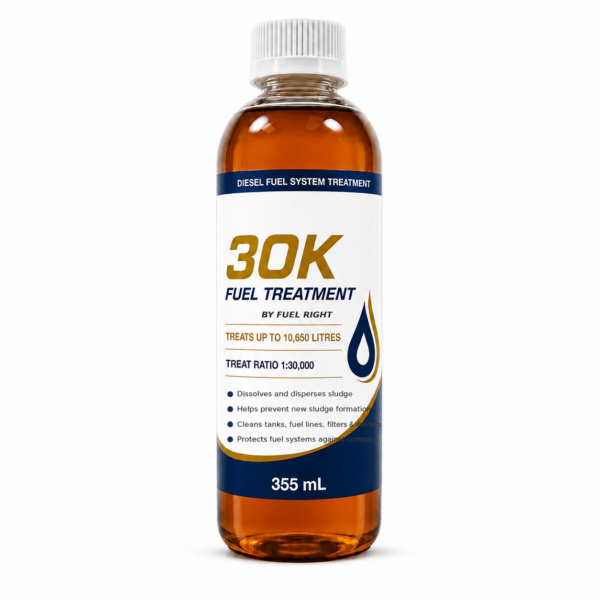
We recommend 30K for applicable bulk treatment programmes focused on sludge, deposits and corrosion protection. Our standard bulk ratio is 1:30,000; we confirm any fuel-grade-specific instructions before dosing.
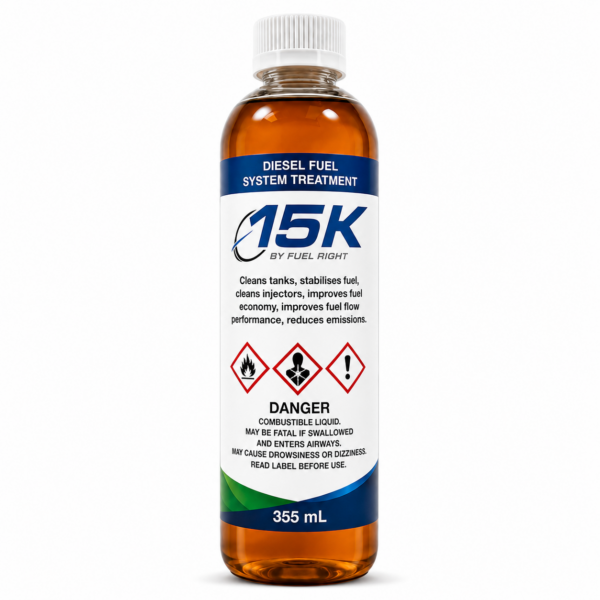
We select 15K where its cleaning, corrosion-protection, lubricity and fuel-line freeze-protection functions suit the application. Our standard bulk ratio is 1:15,000; we confirm the operating conditions and treatment objective before application.
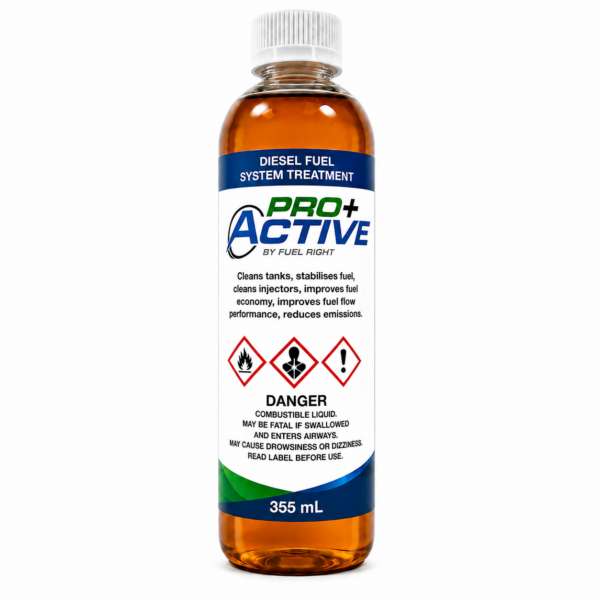
We recommend ProActive for applicable diesel systems where sludge control, corrosion protection and enhanced lubricity are required. Our standard bulk ratio is 1:10,000; we assess the system condition before selecting routine or shock treatment.
Backup Generators FAQs
We review storage and delivery history and inspect for water and contamination. Where condition is uncertain, we recommend representative sampling and assessment of filter history. We use those findings to select treatment and identify any physical cleaning or further investigation required.
We base recommendations on storage turnover, tank condition, operating risk and the site’s maintenance requirements. We recommend an additional review after water ingress, a contamination event or recurring filter blockage. We do not prescribe one universal testing interval for every standby installation.
We use treatment to address defined stored-fuel risks. We recommend assessing generator readiness through the installation’s inspections, operational testing and fuel-condition evidence. We keep those checks within the maintenance programme rather than treating an additive application as proof of system performance.
We calculate additive volume by dividing the diesel volume by the applicable treatment ratio. For standard bulk treatment of 10,000 litres, we use 1 litre of ProActive, approximately 667 mL of 15K or approximately 333 mL of 30K. We confirm the product and fuel application before dosing; grade-specific marine instructions can differ.
We use bulk treatment for a defined ongoing programme and assess shock treatment separately where existing sludge requires accelerated cleaning. Our product-specific shock ratios are 1:4,000 for ProActive, 1:6,000 for 15K and 1:12,000 for 30K. For small-to-medium tanks, we confirm the tank-capacity dosing basis and plan filter monitoring before application. We recommend appropriate physical removal where water or sediment has accumulated.
We provide product-specific instructions through our information sheets and handling requirements through our Safety Data Sheets. We recommend reviewing the relevant documents before application and contacting us with the fuel grade, tank capacity, stored volume and contamination findings so we can confirm the treatment approach.
Purchase Fuel Treatment for Backup Generators
For standby diesel tanks and critical backup generators, review stored-fuel condition, water management and treatment compatibility before ordering. Bottle packs are available online; larger diesel tanks and bulk packs require a site-specific quote including freight and treatment requirements.
Compare bottle products and standard treatment quantities or request a commercial quote. Confirm the selected fuel treatment against current product documentation before use.