Mining & remote operations
Diesel treatment for mining and remote operations
We support diesel-quality management across Australian mine sites and remote operations, from bulk storage and refuelling systems to mobile plant, generators and support equipment. Our treatment programme addresses sludge, deposits and corrosion risk within the fuel path, with selection based on the fuel grade, contamination findings and operating environment.
Fuel care for demanding remote operations
We recognise the operational consequence of a fuel problem where resupply, spare filters and specialist support may be distant. We focus on defined dosing controls, representative monitoring and a practical response to existing contamination, helping site teams plan fuel care around deliveries, shutdowns and critical operating demand.
Manage contamination at storage and protect the diesel supply to critical plant
We connect treatment to the way diesel moves through a remote operation. Our priorities are clean storage, consistent dosing, monitored filtration and clear records that support maintenance decisions.
Address sludge in bulk storage and downstream fuel systems
We use treatment designed to break down established sludge and help prevent further formation. We assess the storage and dispensing system together so deposits in bulk tanks are considered alongside recurring filter problems in the equipment receiving the diesel.
Protect metal surfaces against fuel-system corrosion
Our chemistry forms a microscopic protective film on metal surfaces within the fuel system. We recommend investigating water ingress and tank-condition concerns at the same time, so treatment supports a broader maintenance response rather than masking a storage defect.
Maintain consistent treatment across incoming deliveries
We help define the appropriate product, ratio and dosing basis for bulk deliveries. We recommend recording the diesel volume and additive quantity for each delivery, making treatment traceable across shifts, suppliers and changes in operating demand.
Plan filtration capacity during initial cleaning
We account for the release of existing contamination when treatment begins in an established system. We recommend monitoring filters and separators and planning access to replacement elements, with physical cleaning or polishing where the contamination burden requires removal.
Support dependable diesel supply to remote power systems
We review storage turnover and condition for generators supplying accommodation, communications and site services. We recommend sampling and fuel-condition checks before extended standby or sustained operation, matched to the site’s maintenance requirements.
Use operating evidence to guide ongoing fuel care
We recommend linking tank samples, water findings, filter changes and treatment records. We use that evidence to distinguish contamination carried in a delivery from conditions developing in storage and to refine the programme for each operating area.
Mining & Remote Operations: practical applications
Mine-site bulk storage
We assess bulk tanks against throughput, delivery practices and contamination history. We recommend treatment controls and monitoring that support the full storage-to-dispensing fuel path.
Mobile mining equipment
We consider the diesel supplied to haulage, loading and other mobile plant. We recommend investigating repeated filter restriction at the supply source as well as at the individual machine.
Remote generation
We review tanks supplying continuous or standby power, including storage age and filtration history. We recommend a treatment plan aligned with the generator maintenance and operating requirements.
Exploration and temporary camps
We assess diesel held in temporary storage and transport tanks. We recommend clear delivery, dosing and inspection records where changing locations and intermittent use can make fuel history difficult to track.
Mobile refuelling systems
We include transfer tanks, hoses and dispensing arrangements in the fuel-quality review. We recommend maintaining treatment traceability as diesel moves from bulk storage to plant across a large site.
Remote infrastructure and support assets
We review diesel held for communications, pumping and other supporting infrastructure. We recommend condition checks before relying on supplies with low turnover or limited routine visibility.
A controlled diesel treatment programme for remote operating conditions
We establish the fuel grade, tank capacities, incoming delivery volumes and known contamination issues before selecting treatment. We review bulk storage and downstream assets together, identifying where water, deposits or repeated filter blockage indicate a need for closer investigation.
We plan the initial cleaning period around operational constraints. Treatment may release existing deposits, so we recommend monitoring filtration, keeping appropriate replacement elements available and assessing whether water, sediment or heavy contamination requires physical removal.
We review the programme against site evidence rather than assuming dosing alone confirms fuel condition. We recommend keeping representative sample results, water observations, treatment records and filter-change history together so the maintenance team can assess trends across deliveries and operating areas.
Relevant Fuel Right products
We select treatment against the fuel grade, tank condition and operating requirements. We distinguish the formulations by their documented functions and application guidance rather than treating concentration alone as a measure of suitability.
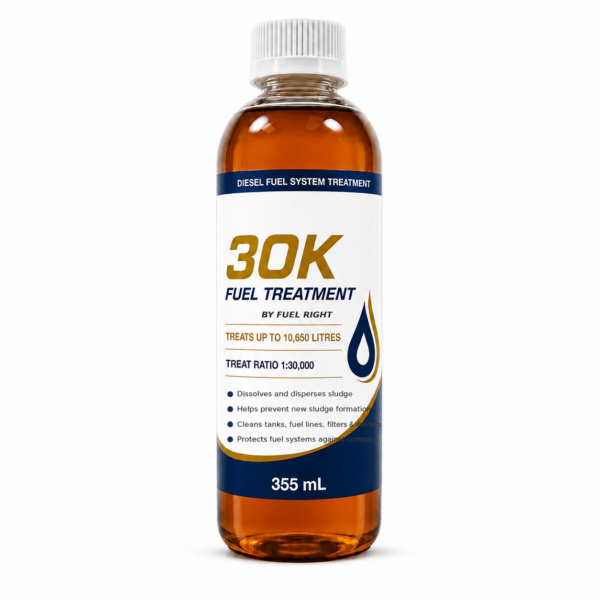
We recommend 30K for applicable bulk treatment programmes focused on sludge, deposits and corrosion protection. Our standard bulk ratio is 1:30,000; we confirm any fuel-grade-specific instructions before dosing.
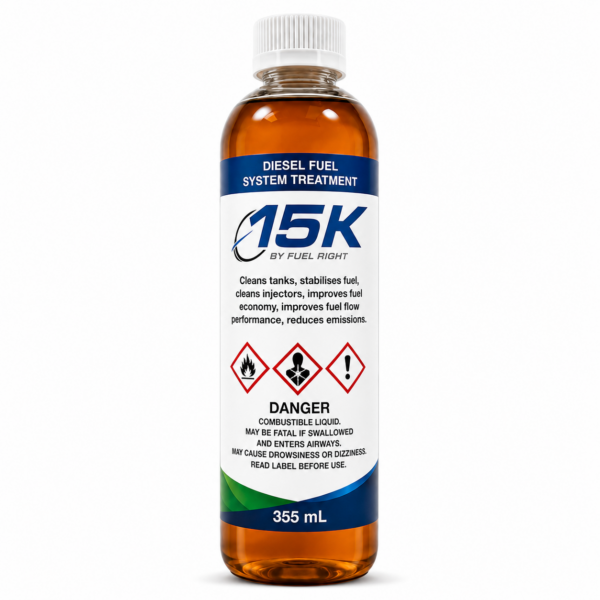
We select 15K where its cleaning, corrosion-protection, lubricity and fuel-line freeze-protection functions suit the application. Our standard bulk ratio is 1:15,000; we confirm the operating conditions and treatment objective before application.
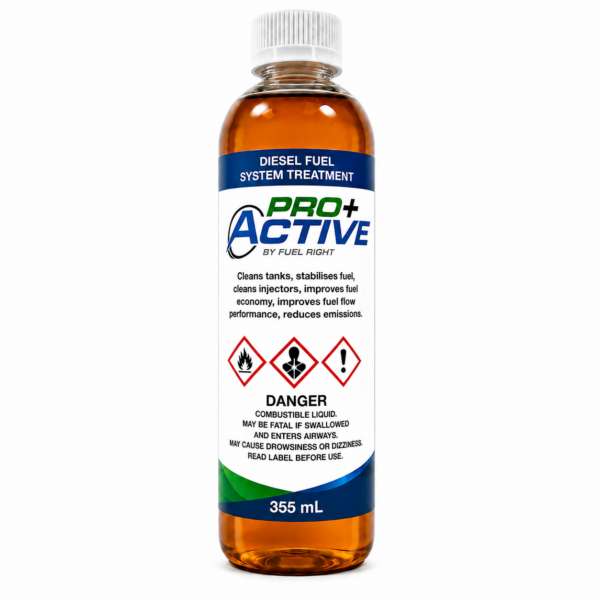
We recommend ProActive for applicable diesel systems where sludge control, corrosion protection and enhanced lubricity are required. Our standard bulk ratio is 1:10,000; we assess the system condition before selecting routine or shock treatment.
Mining & Remote Operations FAQs
We review delivery frequency, storage capacity and the availability of filters and maintenance support. We then recommend a treatment plan that accounts for the initial release of existing deposits, with monitoring and any necessary physical cleaning planned before the system is placed under sustained demand.
We recommend looking upstream at the shared storage and dispensing system as well as inspecting the affected equipment. We assess tank samples, water findings, delivery history and filter records to determine whether the issue is common to the diesel supply or isolated to an individual asset.
We recommend a defined product and ratio, a documented calculation method and a record of the diesel volume and additive quantity for each delivery. We also recommend a clear responsibility for checking the dose, so changes in shift personnel do not change the treatment programme.
We calculate additive volume by dividing the diesel volume by the applicable treatment ratio. For standard bulk treatment of 10,000 litres, we use 1 litre of ProActive, approximately 667 mL of 15K or approximately 333 mL of 30K. We confirm the product and fuel application before dosing; grade-specific marine instructions can differ.
We use bulk treatment for a defined ongoing programme and assess shock treatment separately where existing sludge requires accelerated cleaning. Our product-specific shock ratios are 1:4,000 for ProActive, 1:6,000 for 15K and 1:12,000 for 30K. For small-to-medium tanks, we confirm the tank-capacity dosing basis and plan filter monitoring before application. We recommend appropriate physical removal where water or sediment has accumulated.
We provide product-specific instructions through our information sheets and handling requirements through our Safety Data Sheets. We recommend reviewing the relevant documents before application and contacting us with the fuel grade, tank capacity, stored volume and contamination findings so we can confirm the treatment approach.