Transport & fleet
Diesel treatment for transport fleets and depot storage
We help Australian transport and fleet operators manage diesel condition from depot storage to vehicle fuel systems. Our treatment approach addresses sludge, deposits and corrosion risk, with practical guidance for bulk dosing, filtration and investigation of recurring fuel-quality issues.
Fuel care from depot storage to vehicle systems
We focus on the commercial priorities behind fuel care: vehicle availability, predictable servicing and a dependable depot supply. We assess the complete fuel path rather than treating each blocked filter as an isolated vehicle problem, and we recommend records that connect deliveries, tank condition and fleet maintenance findings.
Protect the depot supply and strengthen fuel care across the fleet
We connect treatment at the storage stage with the diesel delivered to vehicles. Our approach combines deposit control, product selection and monitoring with a clear maintenance record.
Address deposits before diesel reaches vehicle fuel systems
We use treatment designed to dissolve and disperse sludge and help control further formation. We assess depot tanks and dispensing arrangements so fuel-system care starts at the shared supply rather than only after a vehicle develops a restriction.
Support cleaner fuel delivery to pumps and injectors
We select treatment against the diesel and the operating requirements of the fleet. Where enhanced lubricity is part of the objective, we consider ProActive and 15K while confirming the appropriate application and the condition of the supplied diesel.
Protect storage and fuel-system metal surfaces
Our treatment chemistry forms a microscopic corrosion-protection film. We include that function in the programme while recommending that water ingress, tank defects and accumulated contamination are investigated and addressed through maintenance.
Make bulk treatment traceable at each delivery
We help define the product and dosing ratio for depot deliveries. We recommend recording the diesel volume, additive quantity and treatment date so the maintenance team can review dosing consistently across suppliers, delivery sizes and operating shifts.
Manage filter servicing during the cleaning period
We account for existing deposits that treatment may release into the fuel. We recommend closer monitoring of depot and vehicle filtration during initial cleaning, together with physical removal where accumulated water or sediment requires a separate response.
Use fleet maintenance findings to improve the programme
We recommend reviewing filter changes and recurring vehicle issues alongside depot sample results and delivery records. We use that combined evidence to distinguish a supply problem from an individual vehicle issue and to guide the next investigation.
Transport & Heavy Fleets: practical applications
Depot storage tanks
We assess tank condition, delivery patterns and storage turnover before selecting treatment. We recommend monitoring that covers the diesel in storage and the supply delivered through depot dispensing equipment.
Heavy road transport
We consider sustained operating demand and the consequences of an interrupted diesel supply. We recommend treating the shared storage system and investigating recurring filtration issues across the fleet.
Distribution and delivery fleets
We review depot refuelling, vehicle usage and maintenance findings together. We recommend consistent dosing records and a practical escalation process when several vehicles report similar fuel-system issues.
Bulk deliveries and transfer systems
We assess how diesel is received, stored and transferred. We recommend confirming the actual delivery volume and documenting the additive quantity so the treatment ratio remains consistent.
Mobile refuelling and support vehicles
We include transport tanks and mobile dispensing in the fuel-care programme. We recommend traceable records as diesel moves between a depot, service vehicle and operating equipment.
Fleet standby and low-use vehicles
We review storage time and intermittent operation for vehicles outside normal turnover. We recommend checking diesel condition before recommissioning and monitoring filters when an established system is being cleaned.
A depot-to-vehicle diesel treatment programme
We begin with the depot storage system, the diesel grade, typical delivery volumes and any recurring vehicle filter or injector concerns. We assess tank condition and fuel history before choosing treatment, so the recommendation responds to the cause of the problem rather than only its symptoms.
We assess shock treatment separately when existing deposits require an initial cleaning programme. We plan filtration monitoring during that period and recommend physical removal of accumulated water or sediment where necessary. We also recommend correcting the source of water ingress.
We use delivery records, representative samples and fleet maintenance findings to review the result. We assess changes in fuel condition and filter servicing against a consistent baseline, without promising a universal reduction in consumption, emissions or operating cost.
Relevant Fuel Right products
We select treatment against the fuel grade, tank condition and operating requirements. We distinguish the formulations by their documented functions and application guidance rather than treating concentration alone as a measure of suitability.
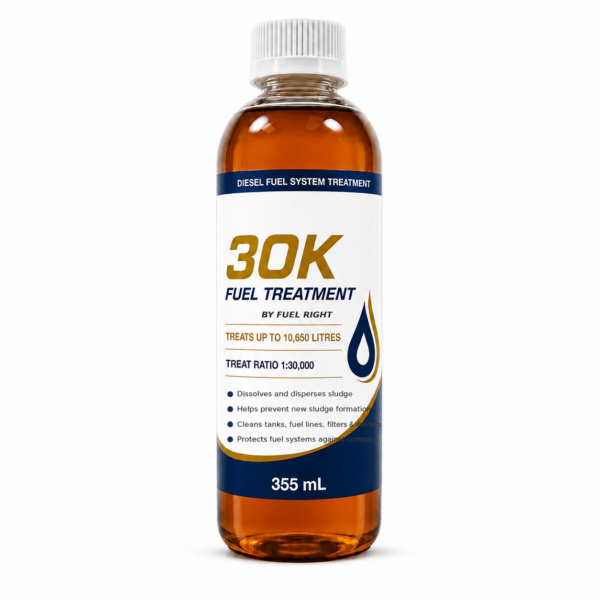
We recommend 30K for applicable bulk treatment programmes focused on sludge, deposits and corrosion protection. Our standard bulk ratio is 1:30,000; we confirm any fuel-grade-specific instructions before dosing.
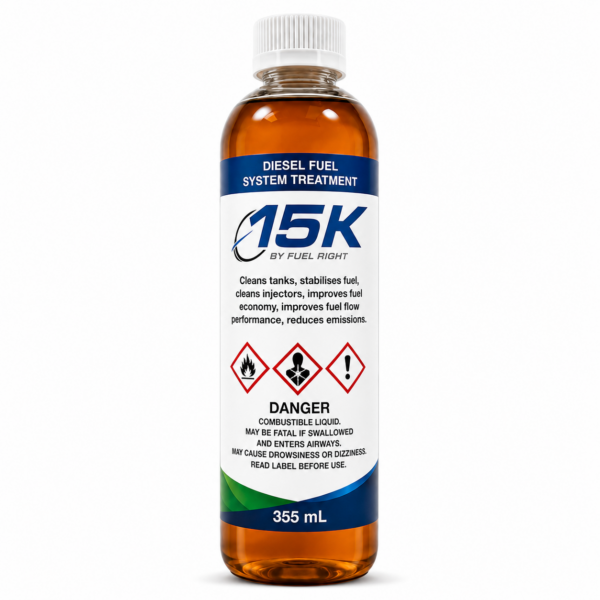
We select 15K where its cleaning, corrosion-protection, lubricity and fuel-line freeze-protection functions suit the application. Our standard bulk ratio is 1:15,000; we confirm the operating conditions and treatment objective before application.
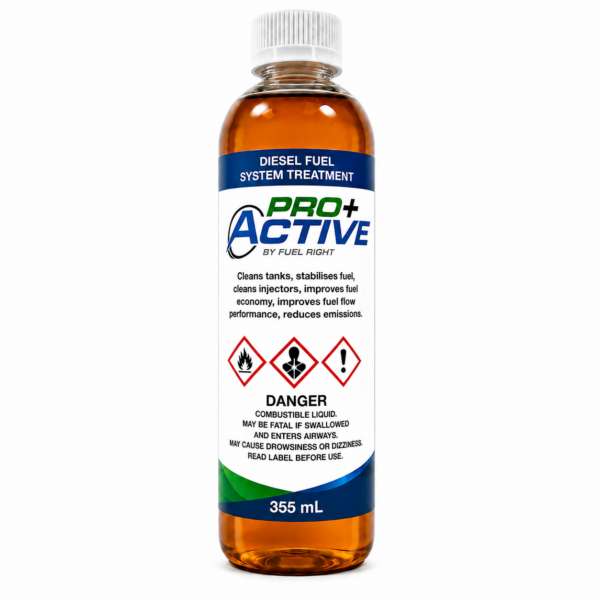
We recommend ProActive for applicable diesel systems where sludge control, corrosion protection and enhanced lubricity are required. Our standard bulk ratio is 1:10,000; we assess the system condition before selecting routine or shock treatment.
Transport & Heavy Fleets FAQs
We confirm the product and ratio against the fuel grade and treatment objective, then calculate the dose from the volume being treated. We recommend adding treatment during a delivery to assist mixing and recording the diesel and additive quantities together. We assess the tank condition before relying on routine bulk dosing.
We recommend comparing affected vehicles, refuelling locations and dates with depot deliveries, tank samples and filtration records. We use those findings to determine whether the pattern points to a common supply issue or an individual vehicle problem, then recommend the appropriate treatment or further investigation.
We recommend comparing consistent operating measures before and after implementation, including filter servicing, sample findings and maintenance events. We account for changes in routes, loads and operating conditions when reviewing vehicle performance. We use measured fleet evidence rather than promising the same saving for every vehicle.
We calculate additive volume by dividing the diesel volume by the applicable treatment ratio. For standard bulk treatment of 10,000 litres, we use 1 litre of ProActive, approximately 667 mL of 15K or approximately 333 mL of 30K. We confirm the product and fuel application before dosing; grade-specific marine instructions can differ.
We use bulk treatment for a defined ongoing programme and assess shock treatment separately where existing sludge requires accelerated cleaning. Our product-specific shock ratios are 1:4,000 for ProActive, 1:6,000 for 15K and 1:12,000 for 30K. For small-to-medium tanks, we confirm the tank-capacity dosing basis and plan filter monitoring before application. We recommend appropriate physical removal where water or sediment has accumulated.
We provide product-specific instructions through our information sheets and handling requirements through our Safety Data Sheets. We recommend reviewing the relevant documents before application and contacting us with the fuel grade, tank capacity, stored volume and contamination findings so we can confirm the treatment approach.