Fuel Right Australia Knowledge Centre
Microbial growth in diesel: investigate, act and verify
Diesel bug describes microbial contamination rather than a single organism. A sound response connects representative testing with water findings, tank condition and a documented corrective plan.

Key Concepts to Understand
Diesel Bug
Diesel bug is an informal name for microbial contamination, rather than a single organism. Avoid using colour or deposit appearance as the sole basis for diagnosis.
Fuel-Water Interface
Microbial activity is often associated with water-containing regions. Choose sampling locations that address the suspected affected area and document whether fuel, water or interface material was collected.
Biomass
Microbial material can contribute to deposits and restricted flow. Removing visible material does not establish the condition of inaccessible tank regions or demonstrate that recurrence is controlled.
Water Control
Manage accumulated water and investigate how it entered. A microbial response that leaves recurring water ingress unresolved may leave an important part of the operating problem unaddressed.
Corrosion Risk
Microbial activity can be relevant to corrosion investigations. Establishing the condition of the tank or attributing a failure needs evidence beyond a single microbial test result.
Filter Plugging
Captured deposits may have microbial and non-microbial components. Review filter findings alongside water, sampling and operating records before deciding the maintenance response.
Build an evidence-based diagnosis
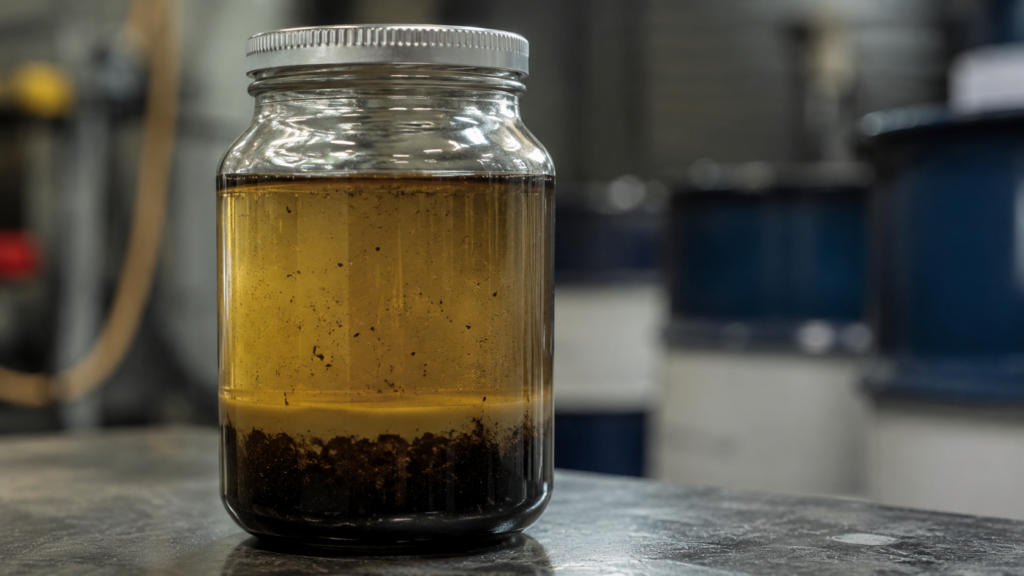
Water-containing areas can support microbial growth in a fuel system. Slime, residues and repeated filter restriction may justify investigation, but appearance does not identify a microbial cause. Record where the material was found and consider other contamination or fuel-condition explanations. Use the sampling and test method appropriate to the question being asked.
Make the sample meaningful
A sample describes a selected location and phase, not every part of the tank. For FUELSTAT, follow the exact kit’s instructions, including the recommended treatment of a free-water phase when present. Keep the tank identifier, sample point, date, kit method and observed condition together. Compare like with like when reviewing results over time.
Control the physical conditions and verify the response
An elevated result needs an agreed escalation and action owner. Assess water removal, deposits, tank access, equipment risk and any further analysis required. Where a chemical microbial-control treatment is considered, product suitability and applicable instructions require separate confirmation. Record what was done, what remains unresolved and how follow-up sampling will establish the next decision.
From the evidence to the next action
| Finding | What to establish | Practical next step |
|---|---|---|
| Suspected slime | Nature and location of material | Combine observations with representative testing |
| Elevated microbial result | Method, sample phase and system context | Escalate under the site procedure |
| Low result with continuing restriction | Other causes and sample representativeness | Broaden the investigation |
| Repeat finding after corrective work | Source control and comparability | Review the plan and follow-up evidence |
Putting the guidance into practice
Illustrative decision example, not a customer case study
If a tank-bottom sample and an outlet sample give different findings, first review their different locations and phases. Those results may be describing different conditions rather than a defective test. Record both before deciding what the discrepancy means.
Match the product to the identified task
Use FUELSTAT for the defined microbial-testing task. Fuel Right treatments and Aquafighter perform separate functions and should not be presented as substitutes for an appropriate microbial-control decision.
Fuel Right treatment formulations · FUELSTAT microbial testing · Aquafighter water management
Frequently asked questions
No. Several physical and chemical causes can restrict filters. Microbial testing addresses one part of the investigation.
They provide different outputs. Select the required method and correct fuel-specific kit, then follow its instructions.
No. It is a water-management product. Existing microbial contamination needs separate assessment and an appropriate corrective plan.
No. Interpret the result within the method’s scope and the location and phase sampled.
Related Fuel Right Knowledge Resources


Continue the investigation
Discuss the finding with Fuel Right Australia
Send the fuel grade, tank and fuel volumes, sample locations, operating history and available results. Include the decision you need to make and any operational constraints.