Fuel Right Australia Knowledge Centre
Diesel sludge: understand the deposit and plan its management
Sludge is a description of accumulated material, not proof of one cause. The useful questions are what the deposit contains, where it is located and how it affects the tank and fuel path.

Key Concepts to Understand
Tank-Bottom Sludge
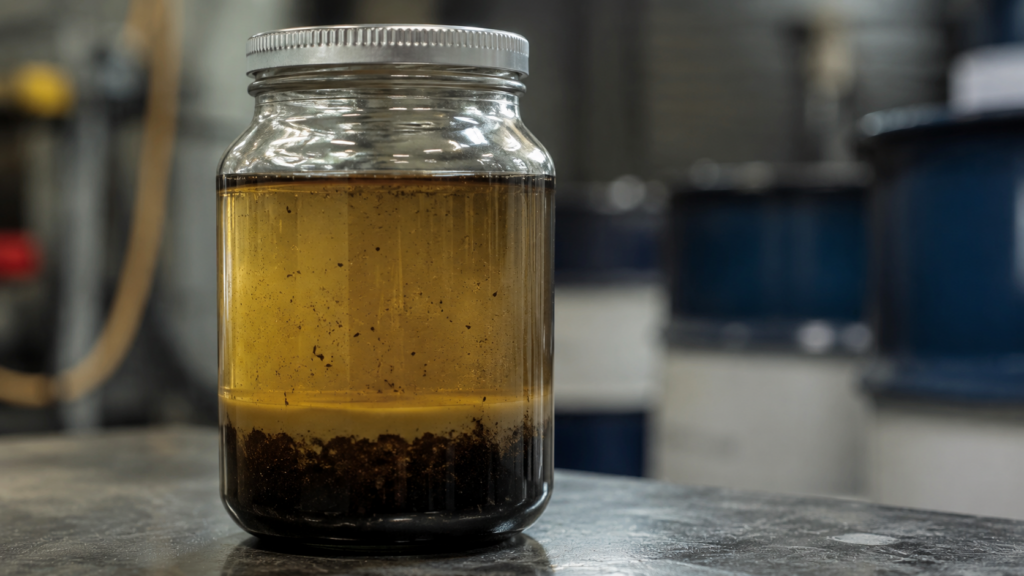
Tank-bottom sludge may contain a mixture of water, solids and fuel-derived material. Plan removal or treatment against the identified deposit and the access available.
Sediment
Settled solids can be disturbed by filling or movement. A clean-looking upper-fuel sample does not describe every part of the tank or the material near its outlet.
Oxidation Products
Chemical ageing can contribute to insoluble material. Physical filtration removes captured solids but does not establish whether the remaining fuel has acceptable chemical stability.
Biomass
Microbial material is one possible contributor to sludge. Select microbial testing where relevant, without assuming that every dark or gelatinous deposit has a biological cause.
Rust And Scale
Tank and system corrosion can generate solid debris. Investigate the component condition and moisture findings rather than treating repeated rust capture only as a filter issue.
Filter Loading
Released or disturbed deposits can increase filter loading. Plan inspection and replacement arrangements around the equipment requirements and the condition being managed.
Separate the observation from the cause
Tank residues can involve water, captured particles, fuel-ageing products and microbial material. Their presence and proportions vary between systems. Record the appearance, location and associated symptoms without labelling every dark deposit as diesel bug. Where composition matters to the response, discuss suitable analysis of the sample or captured material.
Assess access and the risk of disturbance
A tank-bottom deposit can become operationally important when disturbed during delivery, transfer or movement. Review the tank configuration, intake locations, available access and recent events. Decide how the work will control displaced material and protect downstream equipment. The inspection and cleaning scope should reflect the deposit’s location and the system’s constraints.
Agree the treatment or removal objective
Define whether the task is to remove accumulated material, manage a supported deposit problem or maintain a system after corrective work. Physical cleaning and chemical treatment should each have a defined purpose. Plan closer filter monitoring where an initial treatment programme may mobilise existing material, and document the subsequent findings rather than inferring completion from fuel appearance alone.
From the evidence to the next action
| Finding | What to establish | Practical next step |
|---|---|---|
| Bottom deposits | Location and accessible extent | Scope inspection and removal needs |
| Restriction after disturbance | Event timing and captured material | Review the tank-to-filter pathway |
| Suspected biological residue | Representative evidence | Select microbial testing where relevant |
| Residual deposits after intervention | Agreed completion criteria | Review the corrective scope and follow-up |
Putting the guidance into practice
Illustrative decision example, not a customer case study
If restriction begins after a tank delivery, investigate whether the event disturbed existing material as well as whether the incoming fuel introduced contamination. Comparing the sequence, available samples and filter findings creates a more useful enquiry than assuming either cause.
Match the product to the identified task
Fuel Right product information explains supported sludge, fouling and corrosion-control functions. Product selection must sit within a plan for the actual tank condition, water findings and verification needs.
Fuel Right treatment formulations · FUELSTAT microbial testing · Aquafighter water management
Frequently asked questions
No. Sludge is not a sufficiently specific diagnosis. Assess the material and associated fuel and water findings.
Circulating fuel through filtration does not establish that deposits in inaccessible or poorly swept areas have been removed.
Mobilised existing material can change what reaches the filters. Plan monitoring around the product guidance and system condition.
Record the scope performed, observations, removed material where available, test results and any outstanding tank areas or actions.
Related Fuel Right Knowledge Resources


Continue the investigation
Discuss the finding with Fuel Right Australia
Send the fuel grade, tank and fuel volumes, sample locations, operating history and available results. Include the decision you need to make and any operational constraints.
