Agriculture & farming
Diesel treatment for farms and seasonal machinery
We help Australian farming businesses protect stored diesel and manage contamination across farm tanks, tractors, harvesters, irrigation pumps and standby generators. Our treatment approach addresses sludge, fuel-system deposits and corrosion risk, with product selection matched to the condition of the diesel and the equipment it supplies.
Fuel care built around seasonal operations
We focus on the periods that matter commercially: preparing machinery before sowing and harvest, managing tanks between seasons and maintaining a dependable supply during peak workloads. We combine treatment guidance with practical recommendations for water checks, filtration and monitoring, so fuel care becomes a planned part of farm maintenance.
Protect stored diesel and prepare machinery for peak-season demand
We address the fuel-quality issues that can turn a busy operating window into an unplanned maintenance event. Each benefit connects treatment chemistry with a practical action for farm storage and machinery.
Control sludge before seasonal machinery returns to work
We use treatment designed to dissolve and disperse sludge and help prevent further formation in tanks and fuel systems. Before machinery returns to service, we recommend checking for accumulated water and sediment and planning filter monitoring as existing deposits are released.
Support diesel condition through periods of low turnover
We assess how long diesel has been stored, the condition of the tank and the pattern of seasonal use. We select treatment accordingly and recommend representative sampling where condition is uncertain, rather than assuming diesel is ready simply because the tank is full.
Protect tank and fuel-system surfaces against corrosion
Our treatment chemistry forms a microscopic protective film on metal surfaces. We include corrosion protection in the programme while recommending that water ingress, damaged fittings and tank-condition concerns are investigated separately.
Reduce the contamination burden reaching filters and injectors
We address deposits at the storage stage so the fuel path is considered from tank to equipment. During initial cleaning, we recommend closer inspection of filters because released contamination may temporarily increase the material captured by filtration.
Plan fuel care around sowing, harvest and irrigation demand
We help align treatment selection and dosing with deliveries, machinery servicing and peak operating periods. We recommend checking stored diesel before demand increases, giving the farm time to respond to contamination rather than discovering it when equipment is needed.
Build a repeatable maintenance record for farm tanks
We recommend recording deliveries, treatment doses, water findings and filter changes for each tank. These records help distinguish a recurring tank problem from an isolated equipment issue and support informed decisions about sampling, cleaning and ongoing treatment.
Agriculture & Farming: practical applications
Farm storage tanks
We assess above-ground and underground farm tanks against their storage history, water findings and turnover. We recommend a treatment and monitoring approach that addresses the condition of the tank as well as the diesel delivered into it.
Tractors and harvesters
We consider the diesel supplied to high-use machinery and the transition from storage to sustained operation. We recommend checks before peak demand and closer attention to filters where an established system is being cleaned.
Irrigation pumps
We include pump supply tanks and periods of intermittent operation in the fuel-care review. We recommend checking for water and deposits before extended pumping runs, particularly where the same tank has remained in service across seasons.
Agricultural generators
We assess diesel held for standby or remote power alongside generator maintenance. We recommend reviewing storage age, sample results and filtration before relying on a supply that has had limited turnover.
Seasonal and specialist equipment
We review equipment that sits idle between operating windows, including its supply tank and stored diesel. We recommend condition checks and appropriate treatment before recommissioning, followed by monitoring during the initial operating period.
Rural contractors and mobile refuelling
We consider bulk deliveries, transport tanks and the machinery they supply. We recommend traceable dosing and delivery records so treatment remains consistent when refuelling occurs across multiple properties or operating locations.
A practical diesel treatment programme for Australian farms
We start with the storage system: tank capacity, actual diesel volume, time in storage, delivery pattern and any history of water, sludge or filter blockage. We then select treatment for the fuel and the application. A seasonal tank with established deposits requires a different plan from a clean tank receiving regular deliveries.
We distinguish routine bulk treatment from an initial cleaning or shock-treatment programme. Our standard bulk ratios are 1:10,000 for ProActive, 1:15,000 for 15K and 1:30,000 for 30K. We confirm the product-specific instructions and dosing basis before application, and recommend adding treatment during refuelling to assist mixing.
We include water and sediment management in the plan. Treatment can release existing contamination, so we recommend checking tank bottoms where access allows, monitoring filters and arranging physical removal where accumulated contamination requires it. We do not treat dosing as a substitute for correcting water ingress or maintaining the tank.
We review the programme against practical evidence: fuel appearance and sample results, water findings, filter-change history and machinery behaviour. We use those observations to refine ongoing treatment and maintenance before the next peak-season operating window.
Relevant Fuel Right products
We select treatment against the fuel grade, tank condition and operating requirements. We distinguish the formulations by their documented functions and application guidance rather than treating concentration alone as a measure of suitability.
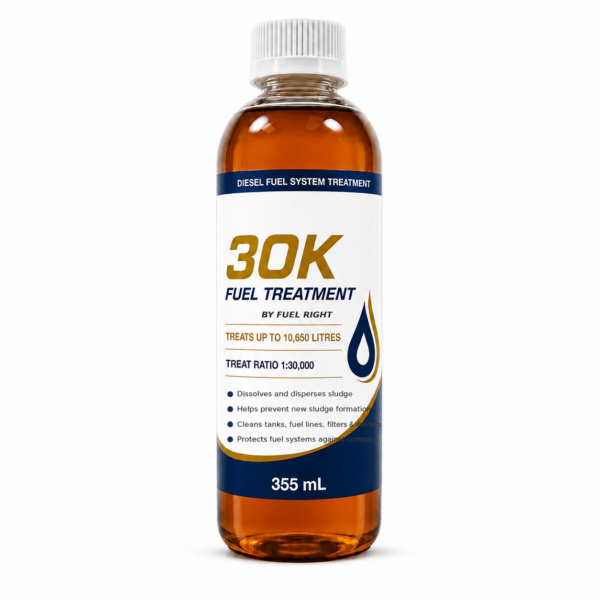
We recommend 30K for applicable bulk treatment programmes focused on sludge, deposits and corrosion protection. Our standard bulk ratio is 1:30,000; we confirm any fuel-grade-specific instructions before dosing.
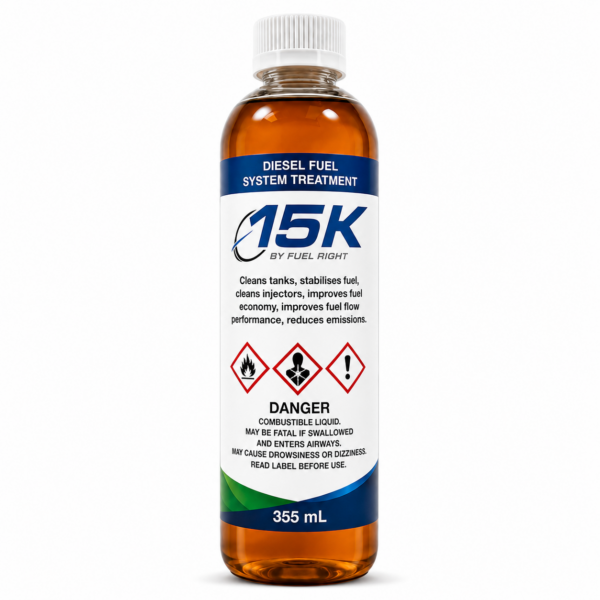
We select 15K where its cleaning, corrosion-protection, lubricity and fuel-line freeze-protection functions suit the application. Our standard bulk ratio is 1:15,000; we confirm the operating conditions and treatment objective before application.
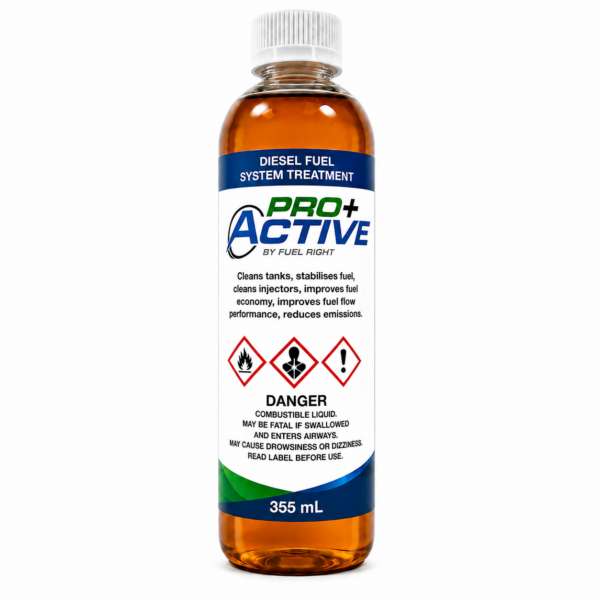
We recommend ProActive for applicable diesel systems where sludge control, corrosion protection and enhanced lubricity are required. Our standard bulk ratio is 1:10,000; we assess the system condition before selecting routine or shock treatment.
Agriculture & Farming FAQs
We review the tank’s storage history and inspect for water, sediment and visible contamination before selecting treatment. Where diesel condition is uncertain, we recommend sampling rather than relying on colour or age alone. We plan any necessary cleaning and filter monitoring before machinery is required for sowing, harvest or irrigation.
We assess the contamination burden and confirm the applicable shock-treatment instructions. We plan filter inspections during cleaning because treatment can release deposits already present in the system. Where substantial water or sediment has accumulated, we recommend physical removal and appropriate filtration alongside treatment.
We recommend a separate record for each tank, including capacity, deliveries, treatment, water findings and filter issues. We use those records to identify which tanks need closer investigation and to maintain consistent treatment as supplies move between storage, transport tanks and machinery.
We calculate additive volume by dividing the diesel volume by the applicable treatment ratio. For standard bulk treatment of 10,000 litres, we use 1 litre of ProActive, approximately 667 mL of 15K or approximately 333 mL of 30K. We confirm the product and fuel application before dosing; grade-specific marine instructions can differ.
We use bulk treatment for a defined ongoing programme and assess shock treatment separately where existing sludge requires accelerated cleaning. Our product-specific shock ratios are 1:4,000 for ProActive, 1:6,000 for 15K and 1:12,000 for 30K. For small-to-medium tanks, we confirm the tank-capacity dosing basis and plan filter monitoring before application. We recommend appropriate physical removal where water or sediment has accumulated.
We provide product-specific instructions through our information sheets and handling requirements through our Safety Data Sheets. We recommend reviewing the relevant documents before application and contacting us with the fuel grade, tank capacity, stored volume and contamination findings so we can confirm the treatment approach.
Purchase Fuel Treatment for Agricultural Equipment
For farm storage tanks, tractors, harvesters and other diesel-powered equipment, compare suitable bottle treatments based on fuel grade, storage conditions and tank capacity. Larger farm tanks and 18.9 L or 208 L drums can be quoted with freight after reviewing the application.
Compare bottle products and standard treatment quantities or request a commercial quote. Confirm the selected fuel treatment against current product documentation before use.