Fuel Right Australia Knowledge Centre
Backup generator fuel maintenance: connect fuel condition with readiness
A standby generator depends on the stored fuel available when an extended run is required. Connect fuel care with the asset’s maintenance plan, operating demand and evidence needed to support readiness.

Key Concepts to Understand
Standby Power
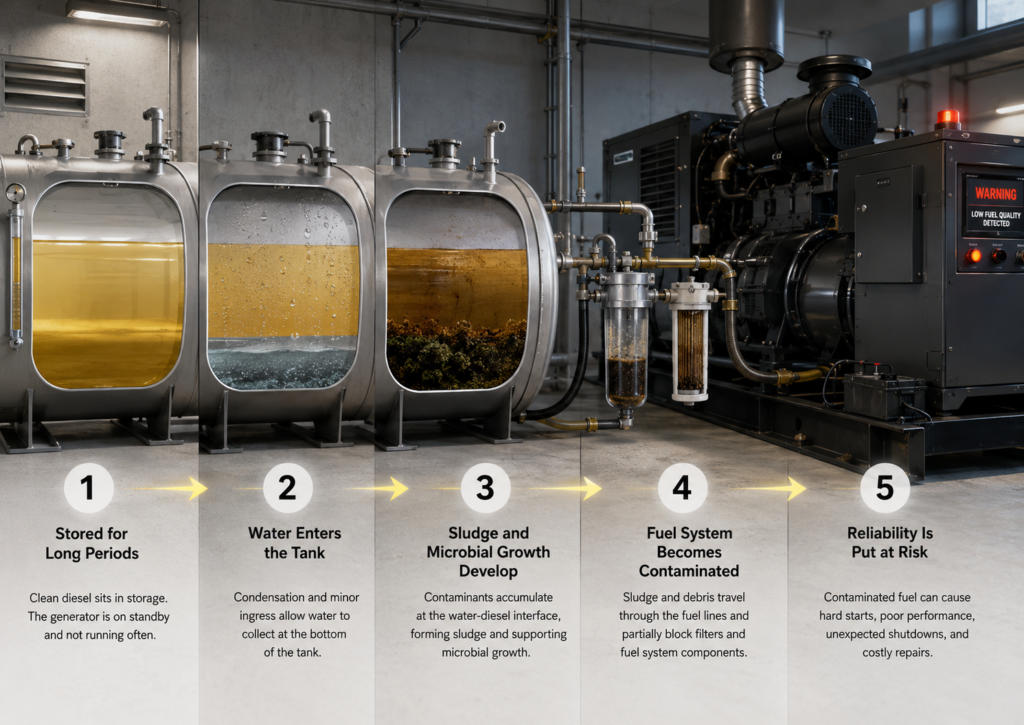
An infrequently operated generator still depends on its stored fuel when called upon. Include fuel storage and transfer in readiness planning alongside the engine maintenance programme.
Low Turnover
Slow turnover can make storage history particularly relevant. Record deliveries, transfers and remaining volumes so the fuel in each tank is traceable.
Start Reliability
A successful start provides useful operating evidence but does not establish every fuel property or sustained-load outcome. Connect fuel checks with the equipment's testing requirements.
Stored Fuel
Bulk tanks, day tanks and connecting pipework form one supply chain. A finding in one location should prompt a review of where representative follow-up evidence is needed.
Filter Condition
Inspect and maintain filters according to the equipment requirements. A filter change should be recorded with its condition and service history so recurring loading can be investigated.
Risk Control
Assign ownership of inspections, sampling, results and escalation. Define what happens when a finding could affect availability, including the operational arrangements for corrective work.
Define the fuel system, not just the generator
Include bulk tanks, day tanks, transfer arrangements, return paths and filtration relevant to the installation. Record fuel identity, storage history, receipts and any shared supplies. The system description helps determine which tanks and sampling points matter and who is responsible for each part of the maintenance programme.
Distinguish an operating test from a fuel assessment
An exercise run provides evidence about the conditions under which it was performed. It is not automatically a complete assessment of fuel throughout every storage tank or of performance under a different duration and demand. Align the fuel assessment with the current equipment requirements and the asset owner’s operating and maintenance procedures.
Make exceptions and follow-up explicit
Maintain records of relevant water observations, samples, filters and corrective actions. Prioritise abnormal findings according to criticality and establish an escalation owner. Before changing a fuel arrangement or undertaking corrective work, coordinate the operational constraints with the responsible site team. Verify the completed work and retain unresolved limitations and next review dates.
From the evidence to the next action
| Finding | What to establish | Practical next step |
|---|---|---|
| Low turnover | Fuel identity, history and requirements | Set a condition-review programme |
| Abnormal water or sample finding | Extent and consequence | Escalate under the asset procedure |
| Repeated filter activity | Material and event history | Investigate the supply and tank path |
| Corrective work planned | Readiness constraints and verification | Agree the scope with the responsible team |
Putting the guidance into practice
Illustrative decision example, not a customer case study
A site with a bulk tank feeding several day tanks should not assume a result from one convenient drain describes the whole installation. Map the fuel paths and operating requirement first, then decide which observations and samples support the readiness decision.
Match the product to the identified task
Discuss Fuel Right treatment selection, FUELSTAT monitoring and suitable Aquafighter applications in the context of the complete generator fuel-maintenance plan.
Fuel Right treatment formulations · FUELSTAT microbial testing · Aquafighter water management
Frequently asked questions
No. State what the test demonstrates and assess the fuel system against the intended operating requirement.
Use the applicable equipment and asset requirements, criticality and site evidence rather than a universal interval.
No. Treatment selection and water management are separate parts of the programme.
Identify the tanks, work, sample points, results, limitations, responsible owner and next review.
Related Fuel Right Knowledge Resources


Continue the investigation
Technical references
Discuss the finding with Fuel Right Australia
Send the fuel grade, tank and fuel volumes, sample locations, operating history and available results. Include the decision you need to make and any operational constraints.
