Fuel Right Australia Knowledge Centre
Dirty diesel: identify the condition before choosing the remedy
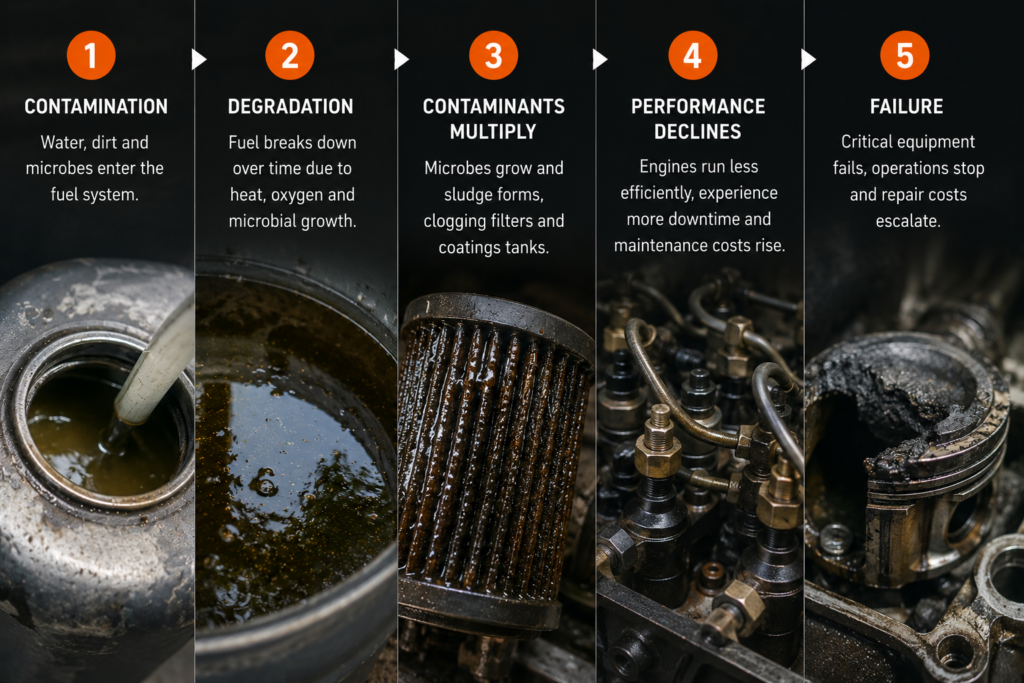
Dirty diesel is an observation, not a diagnosis. A useful investigation separates water, particles, deposits, microbial contamination and changes in the fuel itself so the response addresses the actual problem.

Key Concepts to Understand
Water And Sediment
Water and solids can enter through different routes and collect in different locations. Inspect tank bottoms and transfer points separately when planning the sampling investigation.
Fuel Ageing
Storage time provides context, but cannot establish fuel condition. Consider temperature, exposure, turnover and relevant laboratory properties alongside the delivery history.
Microbial Activity
Microorganisms can contribute to deposits in fuel systems where water is present. A targeted microbial test answers a different question from a particle or water measurement.
Tank-Bottom Contamination
A low-point sample can reveal material that a sample from the dispensing stream misses. Record the location and phase so the finding is interpreted correctly.
Filter Loading
Restriction indicates that material or another condition is affecting flow through the filter. Identify the captured material before assigning a cause or changing the maintenance programme.
Storage Conditions
Review fill points, caps, vents, drainage and transfer housekeeping. Correcting a recurring entry route can matter as much as managing the contamination already present.
Describe what has changed
Record the appearance, where the sample came from and when the symptom began. A dark sample, visible sediment, haze and a distinct water layer are different findings. Compare them with fuel deliveries, filter changes, tank work, weather events and the assets affected. Clear-looking fuel can still need testing; an appearance change alone cannot identify the contaminant.
Investigate the complete fuel path
A system includes the delivery connection, storage tank, transfer equipment and equipment tank. Compare observations at relevant points rather than assuming the storage tank caused every downstream symptom. Preserve filter and sample information under the agreed investigation procedure. An apparently local engine issue may need an equipment investigation as well as fuel analysis.
Select a response that can be verified
Define what you need to establish before ordering tests or selecting a product. Water removal, particle filtration, tank cleaning, microbial testing and fuel treatment perform different duties. Agree the sampling locations and relevant acceptance requirements, then document the corrective work and follow-up findings. Keep affected fuel under the asset owner’s control while suitability is assessed.
From the evidence to the next action
| Finding | What to establish | Practical next step |
|---|---|---|
| Visible water layer | Location, quantity and ingress source | Assess controlled physical removal and investigate recurrence |
| Repeated restriction | Captured material and event timing | Review filters and arrange targeted analysis |
| Suspected microbial material | Representative microbial evidence | Select an appropriate test and sampling plan |
| Uncertain appearance change | Relevant fuel properties and history | Discuss an appropriate laboratory test suite |
Putting the guidance into practice
Illustrative decision example, not a customer case study
If two machines develop filter restriction after receiving fuel from the same tank, compare that shared supply history with other equipment and available delivery records. This helps decide whether the enquiry should focus on a common fuel source, a transfer point or individual equipment.
Match the product to the identified task
Use the Fuel Right, FUELSTAT and Aquafighter product guides only after identifying the relevant treatment, microbial-testing or water-management task.
Fuel Right treatment formulations · FUELSTAT microbial testing · Aquafighter water management
Frequently asked questions
No. Colour does not identify a microbial cause. Review the history and select testing that answers the suspected problem.
No. Visual inspection is one observation. Relevant water, particle or chemical-property testing may still be needed.
Establish the condition and objective first where practicable. Record any urgent intervention because it can affect later interpretation.
Include dated observations, the sample point, fuel type, affected assets and the sequence of deliveries and maintenance events.
Related Fuel Right Knowledge Resources


Continue the investigation
Technical references
Discuss the finding with Fuel Right Australia
Send the fuel grade, tank and fuel volumes, sample locations, operating history and available results. Include the decision you need to make and any operational constraints.
