Fuel Right Australia Knowledge Centre
Diesel oxidation and stability: understand chemical ageing
Oxidation and stability concern how fuel changes chemically and its resistance to particular forms of change. They should not be inferred solely from water observations, microbial screening or a visual inspection.
Key Concepts to Understand
Oxidation
Oxidation is a chemical-ageing process. Its significance should be assessed through relevant fuel properties and operating requirements, rather than inferred solely from storage time.
Gums
Fuel-derived sticky material can contribute to deposit concerns. Appearance alone cannot identify its chemistry or establish whether a proposed treatment will address it.
Sediment
Sediment may be generated within the fuel or introduced from outside it. Analysis and system history help distinguish physical contamination from chemical-condition concerns.
Acids
Chemical change can be relevant to acidity and material compatibility. Ask for the appropriate laboratory assessment instead of treating a field observation as an acidity measurement.
Long Storage
Storage temperature, turnover and exposure affect the context of ageing. Keep these records with test results when considering whether fuel should remain in service.
Fuel Stability
A stability result relates to a specified method and sample. It should be interpreted against the fuel's intended use and applicable requirements, alongside other relevant properties.
Keep chemical condition distinct from cleanliness
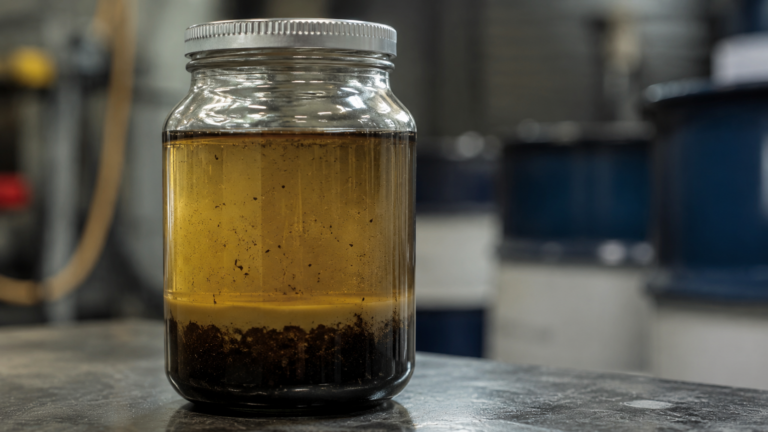
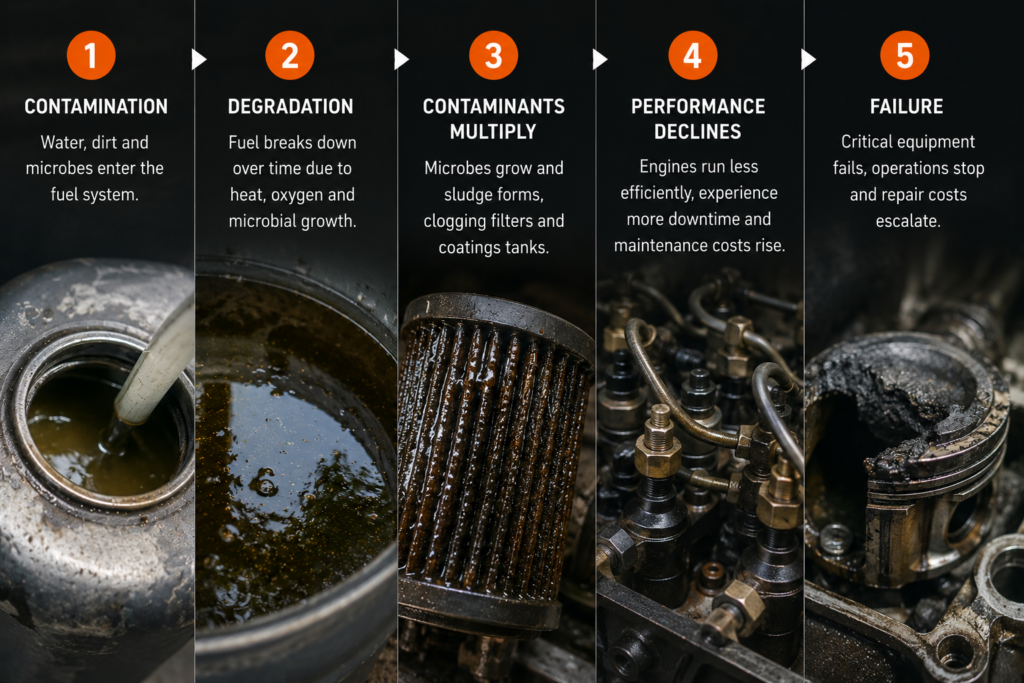
Fuel may contain particles or water, undergo chemical ageing, or experience more than one condition at once. A cleaner sample after filtration does not establish that every chemical property is suitable. Likewise, an abnormal appearance does not identify the reaction or material responsible. Frame the question before selecting the test or intervention.
Review the actual fuel and storage history
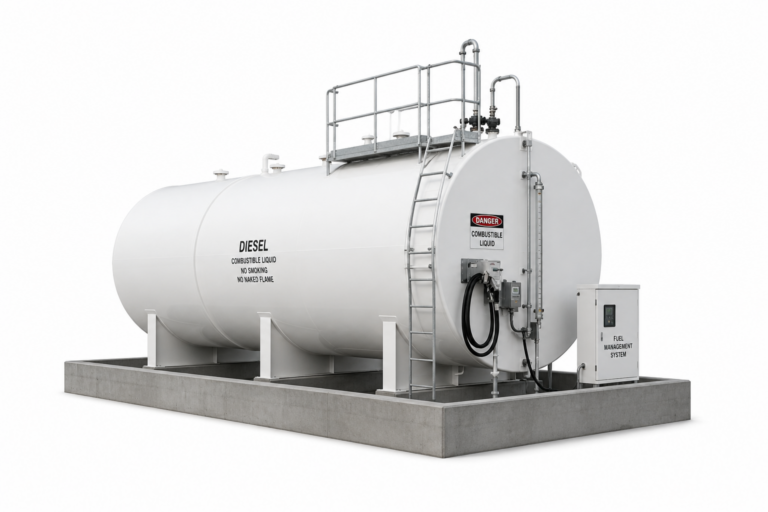
Record the fuel grade and blend information available, receipt dates, turnover, storage conditions and treatments already used. Relevant supplier and equipment requirements provide context for the assessment. Different fuel compositions and histories can behave differently, so avoid assigning one universal degradation timetable to every tank.
Use an appropriate testing and decision pathway
Ask the laboratory which properties and methods answer the intended decision and how results should be interpreted for the application. Identify the limitations of each result and any further work needed. If treatment is proposed, define the supported function and a relevant verification basis; do not presume that a product can restore every chemically degraded fuel to service.
From the evidence to the next action
| Finding | What to establish | Practical next step |
|---|---|---|
| Fuel proposed for extended storage | Fuel identity and relevant stability requirements | Discuss a suitable monitoring basis |
| An appearance change | Cause and applicable properties | Arrange targeted assessment |
| Improved clarity after filtration | What was removed and what remains untested | Keep chemical suitability separate |
| A treatment proposed for ageing fuel | Supported function and measurable objective | Confirm documentation before application |
Putting the guidance into practice
Illustrative decision example, not a customer case study
A sample can look clearer after particle removal while its suitability question remains unresolved. The report should state which finding improved and which properties still require assessment, allowing the asset owner to make the next decision with a complete view.
Match the product to the identified task
Select Fuel Right products for documented formulation functions. A general treatment claim should not be represented as a comprehensive oxidation-stability result or fuel-release decision.
Fuel Right treatment formulations · FUELSTAT microbial testing · Aquafighter water management
Frequently asked questions
No. Chemical ageing and microbial contamination are different concepts and may require different evidence.
No. Record colour as an observation, then select the relevant testing where a chemical-condition decision is required.
No. It establishes only what the removal and subsequent measurement demonstrate.
Do not assume so. Confirm the exact product function and verify the properties relevant to the intended use.
Related Fuel Right Knowledge Resources


Continue the investigation
Technical references
Discuss the finding with Fuel Right Australia
Send the fuel grade, tank and fuel volumes, sample locations, operating history and available results. Include the decision you need to make and any operational constraints.